
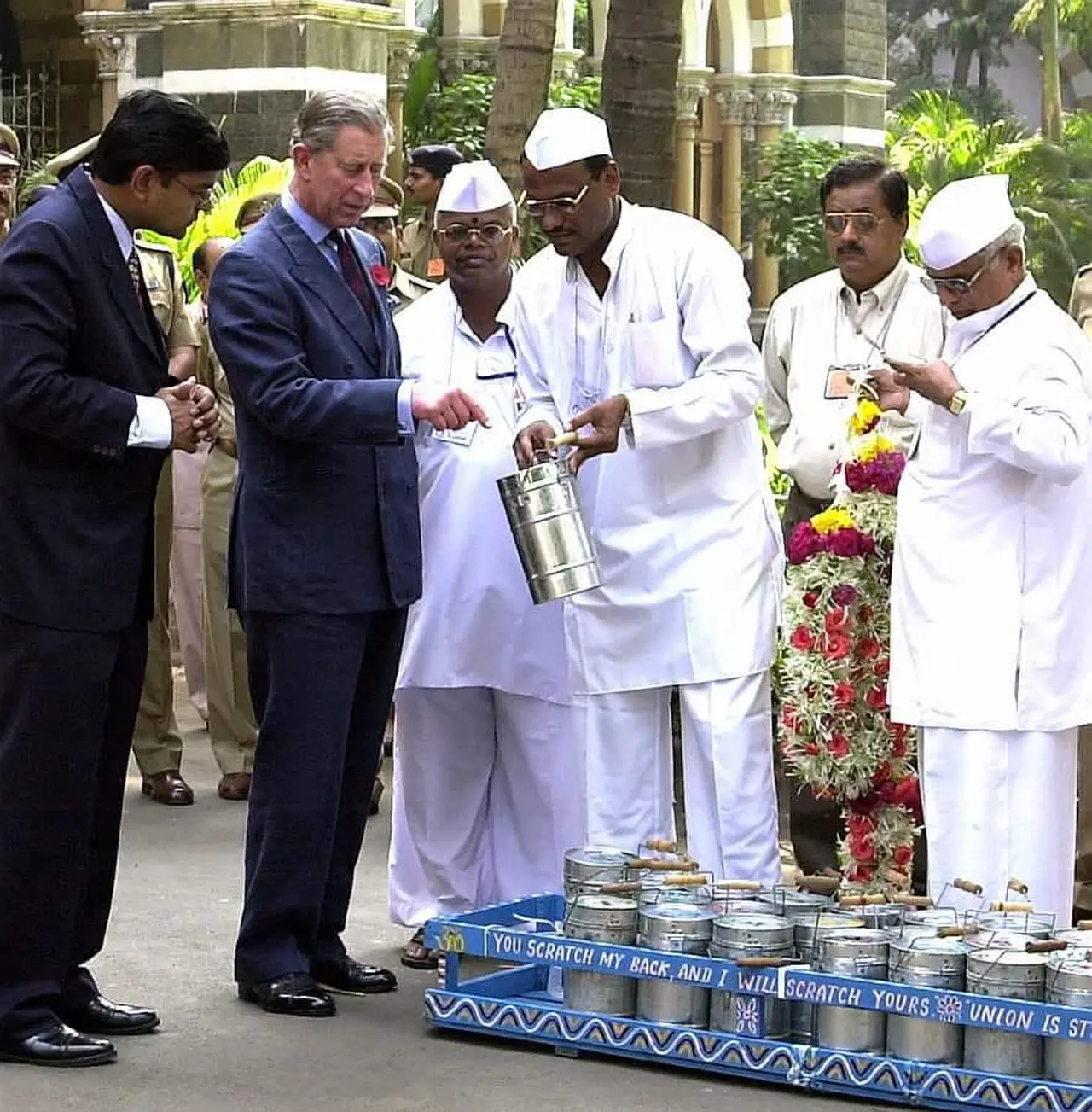
Dabbawala: The Epitome of Efficiency and Reliability – Discover Mumbai's Incredible Lunchbox Delivery System
Discover the fascinating story of Mumbai's Dabbawalas, the hardworking professionals who deliver thousands of home-cooked meals across one of the world's busiest cities with remarkable precision, teamwork and dedication.
Mumbai is a city that moves at an extraordinary pace. Every day, millions of people travel to offices, businesses, factories and workplaces across the city. Amid this busy urban life, one remarkable service has been connecting homes with workplaces for generations: the Mumbai Dabbawala system.
Imagine preparing a fresh homemade lunch in the morning, sending it from your home and receiving it at your workplace several kilometres away, without relying on a modern food delivery application.
This is exactly what Mumbai's Dabbawalas have been doing for decades.
Dressed traditionally in white clothing and Gandhi caps, these hardworking delivery professionals collect lunchboxes from homes, transport them through an organised network of trains and bicycles, sort them at railway stations and deliver them to thousands of office workers.
Their remarkable achievement is not simply about delivering food. It is about organisation, discipline, trust, teamwork and an understanding of Mumbai's complicated transport network.
The Dabbawala service has attracted attention from business schools, researchers, journalists and international visitors who want to understand how such a large distribution system operates with relatively simple technology.
With Mumbai Dream Tours, you can discover this fascinating part of Mumbai's everyday life through a guided Dabbawala experience. Observe the morning collection and sorting process, understand the lunchbox delivery network and learn the stories of the people behind this iconic service.
Let's explore the world of Mumbai's Dabbawalas and discover why they represent one of the most fascinating examples of human coordination and reliability.
Who Are the Mumbai Dabbawalas?
The word Dabbawala comes from two words:
Dabba: A container or lunchbox.
Wala: A person associated with a particular job or service.
A Dabbawala is therefore a person who delivers lunchboxes, commonly known as tiffins, from homes to workplaces and often returns the empty containers later.
The service is particularly important in Mumbai, where many people leave home early for work and prefer freshly prepared homemade meals instead of eating outside.
Dabbawalas collect these meals from households, transport them to offices and ensure that each lunchbox reaches its intended recipient.
The service is based on a coordinated network of workers who divide responsibilities across different neighbourhoods, railway stations and delivery routes.
What makes this system especially interesting is that it has traditionally relied on human coordination, local knowledge, standardised markings and teamwork rather than complex digital technology.
The History of Mumbai's Dabbawalas
The Dabbawala tradition is closely associated with the development of Mumbai as a major commercial and industrial centre.
The service is commonly traced back to 1890, when Mahadeo Havaji Bachche is credited with organising an early lunchbox delivery operation in Bombay, as Mumbai was then known.
As the city expanded and more people travelled from residential neighbourhoods to offices, the demand for home-delivered meals increased.
Many workers preferred food prepared in their own homes because it suited their dietary preferences, religious practices, regional tastes and family traditions.
The Dabbawala network developed to meet this need.
Over the years, the system expanded through local groups, collection points, railway connections and carefully organised delivery routes.
Mumbai's suburban railway network became an important part of the operation, allowing Dabbawalas to move large numbers of lunchboxes across the city.
Despite changes in transport, technology and lifestyles, the service has continued to adapt and remain relevant.
From Traditional Beginnings to a Globally Recognised Service
What began as a practical local service eventually became an internationally recognised example of logistics and operational management.
The Dabbawalas have been discussed in management classrooms, featured in documentaries and covered by international media.
Their story demonstrates how a service can grow through shared responsibility, a clear operating structure and deep knowledge of local conditions.
How Does the Mumbai Dabbawala System Work?
The Dabbawala delivery network is fascinating because several different stages must work together to ensure that a lunchbox reaches the correct person.
A typical delivery involves collection, sorting, transportation, redistribution and final delivery.
Let's understand the process step by step.
1. Morning Collection from Homes
The process usually begins in the morning when Dabbawalas visit households and collect freshly prepared lunchboxes.
Each lunchbox belongs to a particular customer and is identified through markings that help the delivery team understand its destination.
Collection routes are planned according to the locations of homes and the delivery requirements of customers.
A Dabbawala may collect lunchboxes from several households within a particular neighbourhood before moving to the next stage.
2. Sorting and Identification
Once collected, lunchboxes are brought to local collection points or sorting locations.
The Dabbawalas use a system of markings, symbols, colours and numbers to identify important delivery information.
These markings may indicate:
The collection area.
The destination railway station.
The receiving delivery group.
The building or office location.
The final delivery route.
The coding system is especially important because it allows workers who may not know the customer personally to participate in the delivery process.
It is a practical example of a standardised information system developed for everyday use.
3. Transportation by Mumbai Local Train
Mumbai's suburban railway system plays a central role in the Dabbawala network.
After sorting, lunchboxes are transported towards railway stations and loaded onto trains according to established arrangements and railway rules.
The railway system allows Dabbawalas to move large numbers of lunchboxes across long distances without depending entirely on road transport.
This is particularly useful in Mumbai, where road traffic can be unpredictable and travel distances between residential and commercial areas can be significant.
4. Sorting at Destination Stations
When the lunchboxes reach their destination stations, another group of Dabbawalas takes responsibility for redistributing them.
They separate the containers according to buildings, streets and office locations.
This handover process is an important part of the system.
Each group has a defined responsibility, and the smooth movement of lunchboxes depends on cooperation between collection teams, railway transport groups and final delivery teams.
5. Final Delivery to Offices
The final delivery teams transport the lunchboxes to their respective workplaces.
Depending on the area, they may use bicycles, handcarts or carry containers manually.
The goal is to ensure that each customer receives the correct lunchbox around lunchtime.
After lunch, the empty containers are collected and sent back through the network to their original households.
This creates a two-way delivery cycle that operates through an organised sequence of handovers.
Understanding the Dabbawala Coding System
One of the most interesting features of the Mumbai Dabbawala service is its traditional coding system.
Instead of relying entirely on written addresses or digital tracking, lunchboxes carry markings that help workers identify their destination.
These markings can include combinations of colours, numbers, letters and symbols.
The exact marking practices may vary between delivery groups and routes.
The system is designed to communicate important information quickly, even when lunchboxes pass through several different workers during their journey.
Why Is the Coding System So Effective?
The system works because the information is:
Easy to recognise.
Designed around local delivery routes.
Familiar to the workers handling the lunchboxes.
Supported by clearly divided responsibilities.
Repeated through established sorting and handover procedures.
During a guided Dabbawala experience, visitors can learn how these markings help organise a complex delivery operation.
It is a fascinating example of how a simple visual communication system can support a large logistics network.
Why Are Mumbai's Dabbawalas Famous Around the World?
The Dabbawala service has attracted global attention because of its operational discipline and remarkable ability to coordinate large numbers of deliveries.
There are several reasons why it is so widely admired.
1. Reliability and Discipline
Customers depend on their lunchboxes arriving at the right place and around lunchtime.
The service has developed routines and responsibilities that help workers coordinate their activities within a tight daily schedule.
2. Teamwork and Cooperation
No single Dabbawala completes the entire journey alone.
Each person is responsible for a particular part of the process, and the system depends on successful coordination between all participants.
3. Knowledge of Mumbai's Transport Network
The suburban railway system is a major part of the operation.
Workers understand the stations, routes, transfer points and local delivery areas that connect different parts of the city.
4. Simple Technology, Strong Organisation
The Dabbawala network demonstrates that successful logistics does not always require advanced digital systems.
Traditional markings, local knowledge, shared responsibilities and established routines can also support an effective delivery service.
5. Customer Trust
For many customers, the service is part of their daily routine.
The relationship between households, delivery workers and office employees is built on familiarity and trust.
The Human Side of the Dabbawala Service
Behind the remarkable delivery network are people who work hard every day to provide an essential service.
Dabbawalas often begin their working day early, collecting lunchboxes from different neighbourhoods before coordinating their movement towards railway stations.
Their work involves physical effort, careful timing, communication and responsibility.
They operate in crowded markets, railway stations and busy commercial areas, where teamwork is essential.
For many workers, the service is also connected with family traditions and long-standing professional relationships.
The Dabbawala story is therefore not only about logistics. It is about livelihoods, community, cooperation and the dignity of everyday work.
Dabbawalas and the Mumbai Local Train Network
The Mumbai local train network is one of the busiest suburban railway systems in the world.
It connects residential neighbourhoods with major commercial districts and carries millions of passengers on a typical working day.
For the Dabbawalas, this network provides an essential transportation link.
Their delivery system has evolved around the city's railway geography, using stations as important points for transferring lunchboxes between teams.
How Do Local Trains Help the Dabbawalas?
They connect distant residential and business areas.
They reduce dependence on road transport for long-distance movement.
They allow lunchboxes to travel through established railway corridors.
They connect collection teams with destination delivery teams.
They support the movement of large numbers of containers during a limited period.
The relationship between the Dabbawalas and Mumbai's railway network is a wonderful example of how traditional businesses adapt to the infrastructure of a growing city.
The Dabbawala System as a Lesson in Business Management
The Dabbawala service has become an interesting subject for students and professionals studying logistics, operations, supply chain management and organisational behaviour.
Its success offers several lessons.
Clear division of responsibilities: Each worker has a defined role in the delivery process.
Standardised procedures: Regular collection, sorting and handover routines make coordination easier.
Local knowledge: Workers understand their neighbourhoods, railway stations and delivery routes.
Trust and accountability: The service depends on cooperation and responsibility at every stage.
Continuous coordination: Every stage must connect smoothly with the next.
Customer focus: The system is designed around the needs of people who depend on their daily meals.
These lessons are relevant to businesses of different sizes, particularly those involved in delivery, distribution and service management.
Dabbawalas and Sustainable Urban Logistics
The Dabbawala service also offers an interesting perspective on urban mobility and sustainability.
Its use of bicycles, walking, handcarts and public railway transport for different stages of delivery can reduce dependence on individual motorised journeys.
The system demonstrates how shared transport infrastructure and coordinated distribution can support a large city's everyday needs.
However, its environmental impact should be understood in the context of the entire operation, including packaging, collection, transport and return journeys.
For visitors interested in sustainable urban systems, the Dabbawala network offers a valuable real-world case study.
Experience the Dabbawala Tradition with Mumbai Dream Tours
Reading about the Dabbawalas is fascinating, but observing their work in person offers a much deeper understanding.
With Mumbai Dream Tours, visitors can discover the remarkable lunchbox delivery system through a guided Dabbawala experience.
The tour introduces guests to the people, places and processes behind this iconic Mumbai service.
Depending on the selected itinerary and daily operations, you may have the opportunity to:
Observe Dabbawalas collecting lunchboxes.
Understand how lunchboxes are sorted.
Learn about the traditional coding system.
Discover the role of Mumbai local trains.
Observe handovers between different delivery groups.
Learn about the final distribution process.
Hear stories about the history and working culture of the Dabbawalas.
Your guide explains how the different stages connect and why teamwork is so important to the operation.
The experience is particularly interesting for international travellers who want to understand how Mumbai works beyond its famous monuments.
Dabbawala and Dhobi Ghat Tour – Discover Two Remarkable Mumbai Traditions
For visitors who want to understand more about Mumbai's traditional occupations, combining the Dabbawala experience with a visit to Dhobi Ghat is an excellent option.
Both are examples of long-established service industries that continue to play an important role in the city's everyday life.
Dabbawalas – The Lunchbox Delivery Network
Discover how home-cooked meals travel from residential neighbourhoods to offices through an organised system involving collection, sorting, trains and final delivery.
Dhobi Ghat – Mumbai's Traditional Laundry Industry
Explore Mahalaxmi Dhobi Ghat and learn how laundry workers wash, dry, iron and organise large quantities of clothing and linen.
Why Combine These Experiences?
Both occupations reveal the people and systems behind services that residents depend on every day.
The combination helps visitors understand:
Traditional Indian service industries.
Family-based livelihoods.
Teamwork and community networks.
The role of public transport.
The organisation of large-scale everyday services.
Mumbai's working-class history and culture.
With Mumbai Dream Tours, this combination offers a fascinating introduction to the city's human side.
Suggested Dabbawala Tour Itinerary
The following is an illustrative schedule for a guided Dabbawala and Dhobi Ghat experience. The actual route and timing depend on the selected package, railway operations and the Dabbawala activity available on the day.
Time | Experience |
|---|---|
8:00 AM | Meet your guide at the confirmed meeting point in South Mumbai |
8:15 AM | Introduction to the history of Mumbai's Dabbawalas |
8:30 AM | Observe lunchbox collection and sorting, subject to daily operations |
9:00 AM | Understand the traditional coding and identification system |
9:30 AM | Learn about the railway transportation and handover network |
10:00 AM | Continue towards Mahalaxmi |
10:30 AM | Guided visit to Dhobi Ghat, subject to access |
11:00 AM | Understand the traditional laundry process |
11:30 AM | Tour conclusion or continuation according to the selected package |
This is a suggested educational itinerary, not a guaranteed timetable. To observe specific Dabbawala activities, the departure time and route should be coordinated with the operating schedule.
Who Should Experience a Dabbawala Tour?
International Travellers
The Dabbawala service is a fascinating introduction to Mumbai's culture and everyday life. It offers a memorable experience beyond conventional sightseeing.
Business and Management Students
Students interested in operations, logistics, supply chains and teamwork can learn from this real-world delivery network.
Corporate Groups
The Dabbawala system provides interesting lessons in coordination, discipline, responsibility and customer service, making it a useful subject for corporate learning experiences.
Families
Families can discover how an everyday service works and learn about the people behind Mumbai's unique traditions.
Photography Enthusiasts
The collection and sorting activities, traditional clothing, lunchboxes and railway surroundings can provide interesting photographic opportunities, subject to permissions.
Responsible Tourism – Respect the Dabbawalas at Work
The Dabbawalas are working professionals, not performers. Their daily delivery responsibilities must always come first.
Mumbai Dream Tours encourages guests to enjoy the experience responsibly.
Ask permission before photographing individuals.
Do not interrupt the collection or sorting process.
Never block the movement of lunchboxes or workers.
Follow railway safety rules.
Do not enter restricted railway areas.
Respect the time and work of the Dabbawalas.
Listen to your guide and follow local instructions.
The purpose of the experience is to learn from an important local service while respecting the people who make it possible.
Frequently Asked Questions – Mumbai Dabbawala Tour
1. Who are the Mumbai Dabbawalas?
Dabbawalas are delivery professionals who collect home-cooked lunchboxes from households and deliver them to customers at workplaces across Mumbai.
2. When did the Dabbawala service begin?
The service is commonly traced back to 1890, with Mahadeo Havaji Bachche credited with organising an early lunchbox delivery operation.
3. What does the word Dabbawala mean?
The word combines dabba, meaning lunchbox or container, and wala, referring to a person associated with a particular occupation.
4. How do Dabbawalas identify lunchboxes?
They use traditional markings that may include colours, numbers, letters and symbols to identify collection areas, railway stations and delivery destinations.
5. How do Dabbawalas transport lunchboxes?
The system uses a combination of walking, bicycles, handcarts and Mumbai's suburban railway network, depending on the route and delivery stage.
6. How many Dabbawalas work in Mumbai?
The workforce size can change over time. Different reports quote different estimates, so it is best to check current figures before using a specific number.
7. Do Dabbawalas deliver food every day?
The service generally operates on working days according to customer arrangements and the operating schedule. Holidays and special circumstances can affect deliveries.
8. Can tourists watch Dabbawalas working?
Yes, visitors may be able to observe parts of the operation through an organised guided experience, subject to the workers' schedules and local access conditions.
9. Can I see the lunchbox sorting process?
Sorting may be observed at suitable locations when the activity is taking place and visitor access is permitted.
10. Do Dabbawalas use mobile applications?
The traditional system is known for its use of physical markings, established routines and coordination. Individual workers and organisations may use modern communication tools, but the service is not simply dependent on a digital application.
11. Are the Dabbawalas connected with Mumbai local trains?
Yes. Mumbai's suburban railway network plays an important role in transporting lunchboxes between different parts of the city.
12. Why is the Dabbawala system famous?
It is widely recognised for its coordination, teamwork, operational discipline and ability to manage a complex daily delivery network.
13. Can business students visit the Dabbawalas?
Yes. The experience can be particularly educational for students interested in logistics, supply chain management, operations and organisational behaviour. Group access should be arranged in advance.
14. Can I combine a Dabbawala visit with Dhobi Ghat?
Yes. Mumbai Dream Tours offers a Dabbawala and Dhobi Ghat combination experience. Confirm the exact route, timing and inclusions before booking.
15. Is photography allowed during the tour?
Photography depends on the location and permission of the people involved. Always ask before photographing workers or their activities.
16. How long does the Dabbawala experience take?
The duration depends on the selected itinerary. A Dabbawala-only visit and a combined Dabbawala and Dhobi Ghat tour may have different schedules.
17. Is the experience suitable for international tourists?
Yes. It is a particularly interesting cultural experience for international visitors who want to understand Mumbai's everyday working life.
18. How can I book a Dabbawala tour with Mumbai Dream Tours?
Visit the official Mumbai Dream Tours website or contact the team directly to enquire about available dates, group arrangements and tour details.
Book Your Dabbawala Experience with Mumbai Dream Tours
The story of Mumbai's Dabbawalas is a story of dedication, teamwork and trust.
Every day, these hardworking professionals connect homes with workplaces, ensuring that thousands of people can enjoy freshly prepared meals even when they are far away from their families.
Their traditional delivery network demonstrates that extraordinary efficiency can be achieved through organisation, local knowledge and cooperation.
A Dabbawala experience with Mumbai Dream Tours gives you the opportunity to discover this remarkable service, understand its history and appreciate the people behind one of Mumbai's most fascinating traditions.
Go beyond the usual tourist attractions and explore the systems that keep the city moving.
Discover the incredible world of Mumbai's Dabbawalas with Mumbai Dream Tours!
Mumbai Dream Tours – Real People. Real Stories. Unforgettable Mumbai.
Website: /
Phone / WhatsApp: +91 9004135215
Contact us to enquire about the Dabbawala Tour or the Dabbawala and Dhobi Ghat combination experience.